— CASE STUDY · 01 / 02
— Londinium Espresso
Londinium Espresso,
an ecosystem in motion.
A custom operations platform that runs Londinium Espresso's multi-region storefront, checkout, vendor fulfilment, and accounting from one place.
— Client
Londinium Espresso
— Role
Lead engineer
— Year
2022–2026
— Live
—
— The story
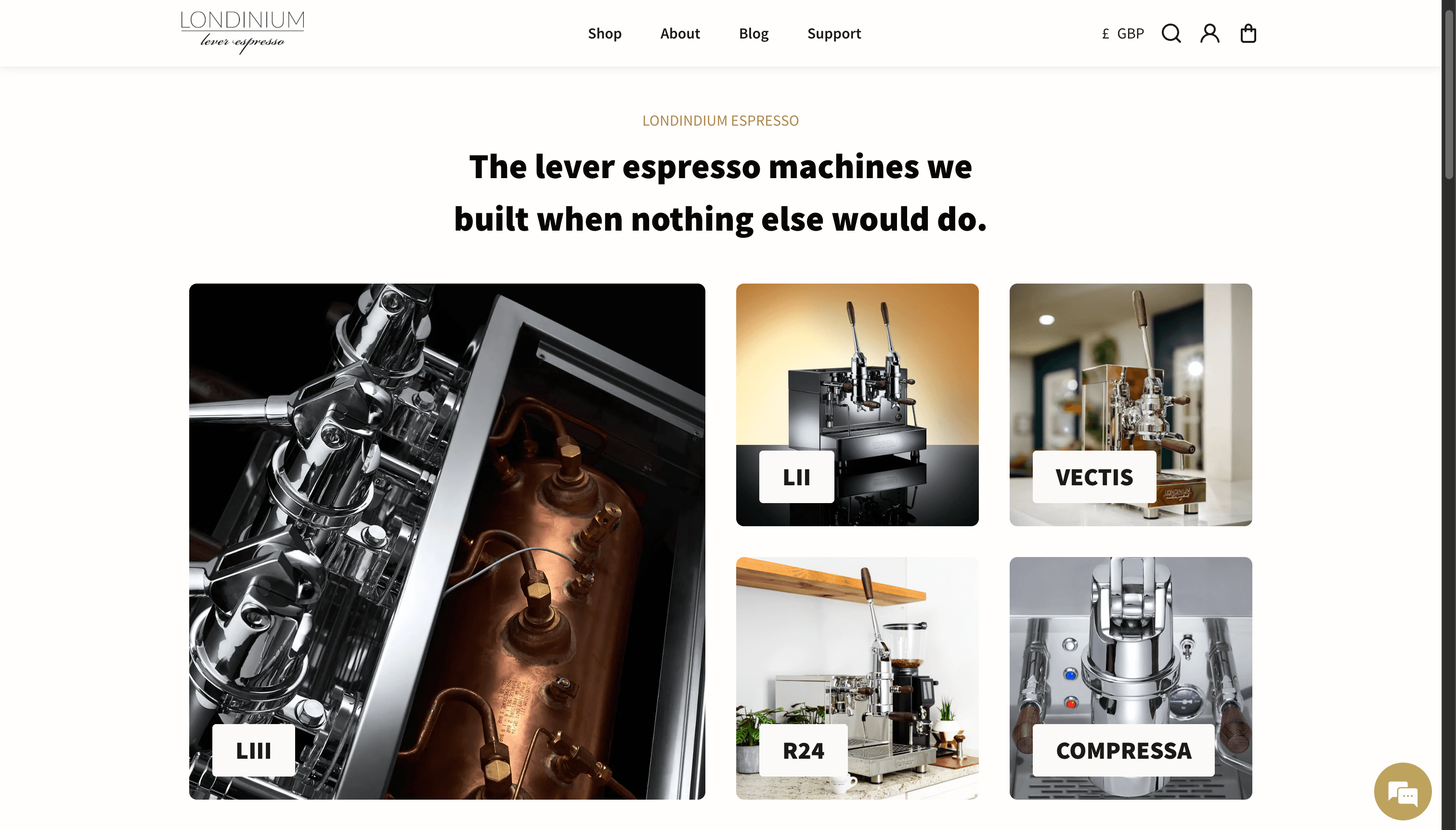
Londinium sells high-end espresso equipment into the UK, New Zealand, Australia, and the rest of the world. Every region has its own tax rules, shipping carriers, price points, and fulfilment partners — and most of the catalogue ships direct from specialist suppliers rather than from a single warehouse. Off-the-shelf tooling couldn't hold that shape without a lot of manual work.
The team needed one place where an order could flow from checkout to supplier to invoice without anyone re-typing it. That is what the platform does. Checkout now behaves correctly across regions without a developer in the loop — customers see the right prices, the right tax treatment, and the right shipping options for where they are. UK VAT, NZ GST, and Australian tax are first-class rules rather than one-off overrides.
Multi-currency, multi-region selling works end to end. Each country is configured independently — carriers, rates, fallback rates, and rest-of-world behaviour all live in the admin console. Live rates come from ShipEngine where they make sense, and a configurable flat-rate engine covers the edge cases.
Orders flow straight into Xero. Every submitted order becomes an invoice with the correct customer, billing address, line items, shipping line, and tax breakdown. Refunds and cancellations issue credit notes. Accounting no longer reconciles storefront exports against invoices by hand.
Vendor fulfilment is automated end to end. Orders that span multiple suppliers are split into per-vendor purchase orders, each gets a branded PDF, the supplier is emailed with the right CC recipients, and clone, recreate, approve, cancel, and complete are one-click actions.
The storefront and checkout redeploy themselves. The team can change shipping rates, tax rules, carriers, or storefront content in the admin console and the relevant Vercel project rebuilds automatically. A pipeline monitor watches for runaway rebuilds and notifies Slack if something is triggering deploys too often.
Product changes stay in sync with Swell. Incomplete products surface on the dashboard as a to-do list rather than as a broken checkout, and every change to an order, vendor, product, or setting is recorded against the user who made it. When something looks wrong on an invoice or a purchase order, the team can see exactly who changed what and when.
Errors land in Bugsnag, operational signals go to Slack, rate-limited checkout calls return gracefully rather than failing hard, and webhooks are verified against each vendor's signing scheme before being trusted.
— Stack
- Laravel
- PHP
- MySQL
- Redis
- Inertia
- React
- TypeScript
- Vite
- SWSwell
- Xero
- SEShipEngine
- Vercel
- Docker
- BUBugsnag
— Outcomes
Numbers that moved the business.
↑ 180,000+ orders processed since launch
↑ ~6,000 hours of manual Xero entry eliminated
↑ Rate & tax changes: 3 days → self-serve
↑ 30+ global supplier vendors automated
— Ecosystem
— Got a project?